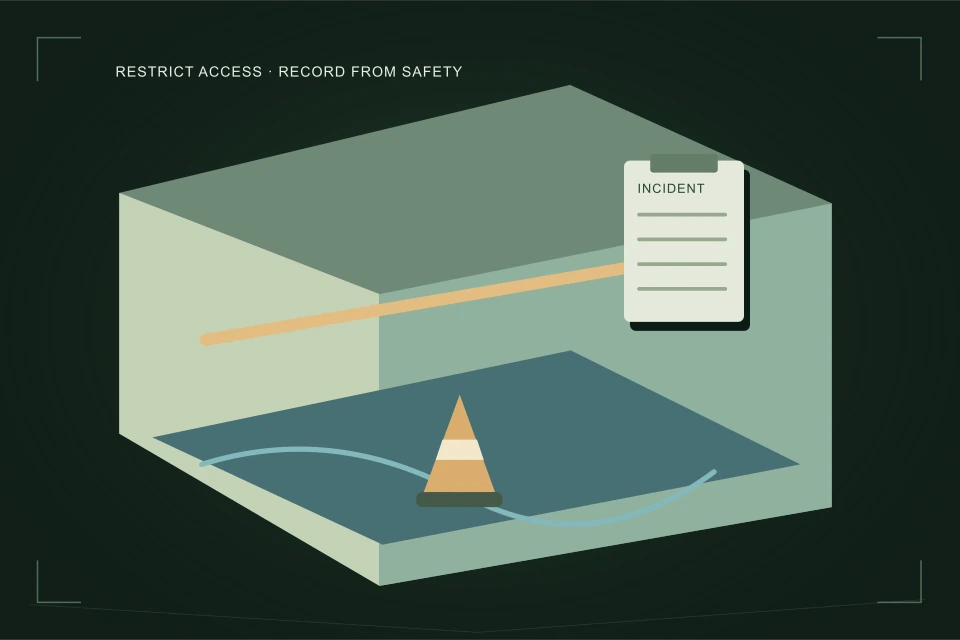
During an active sewage incident, people and electrical safety come first. Keep occupants away from contaminated water, stop contributing water use when safe, and contact the appropriate responders. Calgary asks residents to call 311 for a sewage backup assessment. A manager can record timing, affected areas and actions from a safe location; the log supports investigation without proving the cause.
- What must happen before documentation
- Which first observations help a responder
- How should actions and instructions be logged
- Why should flow restoration and cleanup be separated
01 /What must happen before documentation?
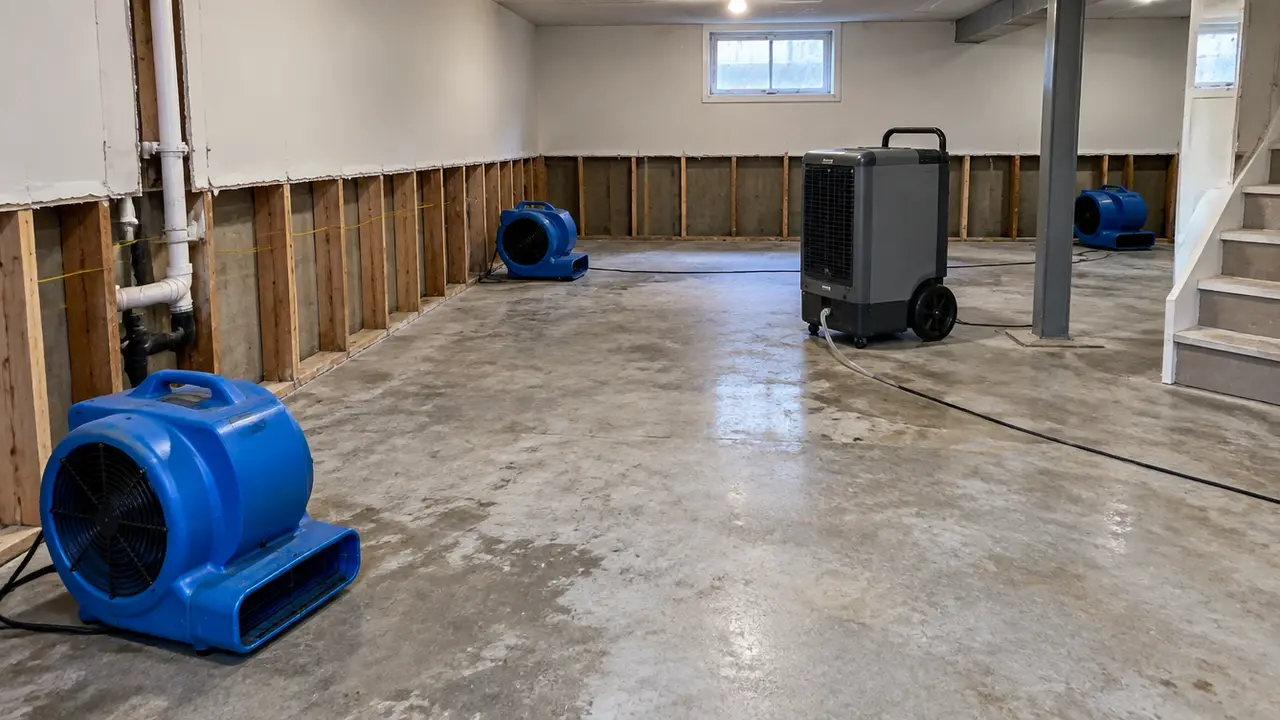
Protect people before collecting evidence. Sewage exposure, wet electrical equipment and inaccessible rooms can turn a routine maintenance call into a serious incident. Keep occupants away from the affected area and do not touch electrical equipment near water. Ask connected occupants to stop water use where the building team can safely communicate that instruction. If a person is in immediate danger, use emergency services. A manager should not enter contaminated water to photograph a drain or retrieve a maintenance record.
Calgary directs people with sewage backup to call 311 so the issue can be assessed as City-related or internal. A multi-unit building also needs its responsible owner or property team and a qualified contractor involved. These calls are complementary; the log should show whom you reached and what instruction was given. Do not promise that a single call will identify the cause or that a contractor has committed to arrive before they confirm it. Record a requested response and a confirmed appointment separately.
02 /Which first observations help a responder?
Describe the affected spaces and fixtures in plain language. Note the first reported time and the time staff observed the condition, since they may differ. Record whether water appeared at a floor drain, toilet, shower or another opening, and whether more than one location is involved. Ask occupants about observations they already made rather than asking them to run taps to reproduce the event. Additional water may worsen a backup. Keep speculation about pipe roots, grease or a municipal problem out of the observation column.
Use approximate extent when an area cannot be approached safely. The log can say basement corridor visible from doorway rather than offering an invented volume or depth. If a safe photograph is possible, preserve the original file and its time. Include a wide view that identifies the space, but avoid residents and personal documents. Record who supplied each report. A second-hand statement is still useful when it is labelled as a report rather than a staff observation.
03 /How should actions and instructions be logged?
Use an action column with the person, time and reason. Examples include access restricted, notice issued to connected occupants, 311 called, insurer notified or contractor appointment confirmed. Quote the essential instruction accurately and keep the reference number where one is supplied. Do not convert an informal suggestion into an approved work scope. If two responders give conflicting instructions, ask the responsible professional to reconcile them and document the clarification before staff undertake the proposed action.
An incident record should identify who can authorise a work order and who can communicate with residents. Keep these roles visible during shift changes. In a condominium, staff should follow the corporation or management arrangements instead of assuming that a tenant or front-desk employee can approve a major repair. The log records the authority given for a particular action; it does not need to settle the entire legal ownership question during the emergency. Give the next shift the current restrictions and outstanding calls first.
04 /Why should flow restoration and cleanup be separated?
Clearing a blockage and cleaning contaminated space are different tasks. A provider may restore drainage while contaminated materials or moisture remain in the building. Record the drainage contractor findings separately from the restoration assessment. Do not mark the incident closed because water is no longer visible or because a cable ran through the line. Ask the responsible providers to state what they completed, what remains restricted and what further inspection or restoration is required.
Speak to the insurer early about documentation and authorisation relevant to the claim. Coverage, deductibles, exclusions and the responsibility for pipe repair are policy-specific. Avoid promising residents that the building policy will pay for every damaged item. Preserve invoices, findings and photographs without changing the contractor cause description to suit a claim theory. A complete evidence file can support a decision; it cannot substitute for the insurer assessment or professional advice about disputed responsibility.
05 /What needs to be handed over at shift change?
| Record | Example | Open question |
|---|---|---|
| Observation | Two lower-level fixtures reportedly affected | Which connected sections were tested? |
| Restriction | Water use notice sent to identified area | Who may lift the restriction? |
| Response | 311 reference recorded; contractor confirmed | What findings are still pending? |
| Recovery | Drain flow restored; restoration assessment open | What spaces remain restricted? |
Make an outstanding-actions list rather than writing a long narrative that hides the next decision. State which contacts have not replied, which spaces remain closed and when the current contractor instruction needs review. Confirm where access keys and the restricted resident schedule are held. A person taking over should be able to identify the active safety instruction without opening every photograph. They should also know what has not been established about the cause.
After the immediate incident, assemble the full contractor and restoration reports. Match the report dates and asset references to the incident log, preserve original files and identify any contradictory finding. The recurring-backup evidence guide explains how to compare multiple events. A recurring pattern deserves investigation, but repeated symptoms alone do not prove that the same pipe defect caused every event.
06 /Example: a basement report during an evening shift
A caretaker receives a report of sewage near a lower-level drain. The caretaker stays outside the affected space, restricts access and notifies the building contact. The responsible team contacts 311 and its drainage provider, records what each says and communicates a water-use restriction to the identified connected area. The initial log says cause unconfirmed. It does not label the event storm surcharge, grease or a failed valve simply because those are familiar possibilities.
When the contractor attends, their finding and the inspected section are added to the record. If flow is restored, the team obtains separate guidance about contaminated-space access and restoration. At handover, the next staff member receives the remaining restrictions, responsible contacts and evidence location. This approach makes the record useful while keeping the people who maintain it out of work they are not trained or equipped to perform.
07 /A useful commissioning check
Ask the building team to keep one current instruction sheet at the front of the incident file. It should identify the affected area, restriction, person who may revise it and contact still awaited. Keep the supporting log behind that sheet so the incoming staff member can act on the current situation without confusing an earlier instruction with the latest one. When a restriction changes, record who confirmed the change and when it was communicated. Preserve the older instruction as history rather than deleting it. This keeps response coordination traceable while the cause and recovery work remain under assessment.
FAQQuestions people ask
Is the building incident log a diagnosis?
No. The log is a dated record of reported and observed facts, instructions and actions. The cause needs an appropriate assessment by the City, contractor or other responsible professional. Keep a suspected cause distinct from a documented finding. When a report is inconclusive, retain that limitation instead of making the incident look more certain than the evidence allows.
Can we test the problem by asking residents to flush?
Do not ask occupants to add water during an active backup simply to improve the log. Extra discharge may spread contamination. Ask for observations they have already made and follow the qualified responder instructions. Any controlled testing belongs in the contractor planned investigation, with the connected users, access and risks addressed.
Does a completed drainage invoice close the building incident?
It records the contracted drainage work, but other recovery tasks may remain. Confirm contaminated-space cleanup, restrictions, further inspection, documentation and insurer questions separately. Ask each provider to describe their actual completed scope and remaining work. An incident can have restored flow while the recovery file is still open.
What should residents be told before the cause is known?
Give the practical instruction they need: affected area, current access or water-use restriction, contact route and when an update will be issued if known. State that the cause is under assessment. Avoid assigning blame or promising coverage, repair dates or uninterrupted service before those details are confirmed by the responsible parties.
NETWORKGo deeper across the HAUSE Sewer network
Sewer backup: what to do in the first hour
What to do in the first hour of a sewer backup: electrical safety, stopping water use, calling a sewer cleaner, insurance photos, health and cleanup.
DrainAugering.caSnaking a drain from the roof vent: when it helps and when it does not
Can you snake a drain from the roof vent? When the vent stack is the right access, clearing a blocked or frost-closed vent, and the roof safety that comes first.
SewerInspector.caCan a sewer scope cause problems? The real risks and how to avoid them
Can a sewer scope cause an issue? The real risks of a camera inspection: toilet reset leaks, seized cleanout plugs, stuck cameras, odours and who pays.