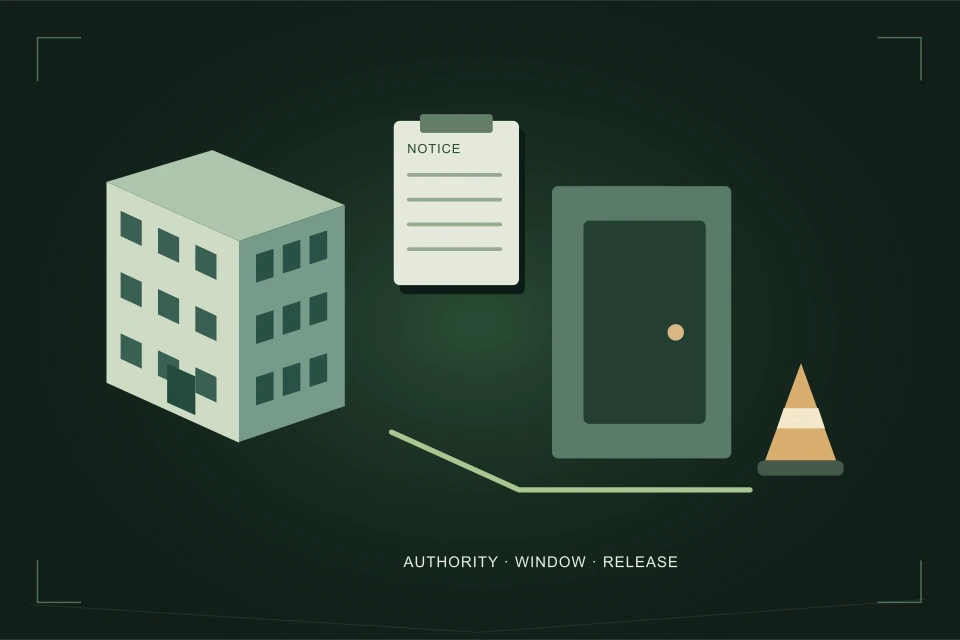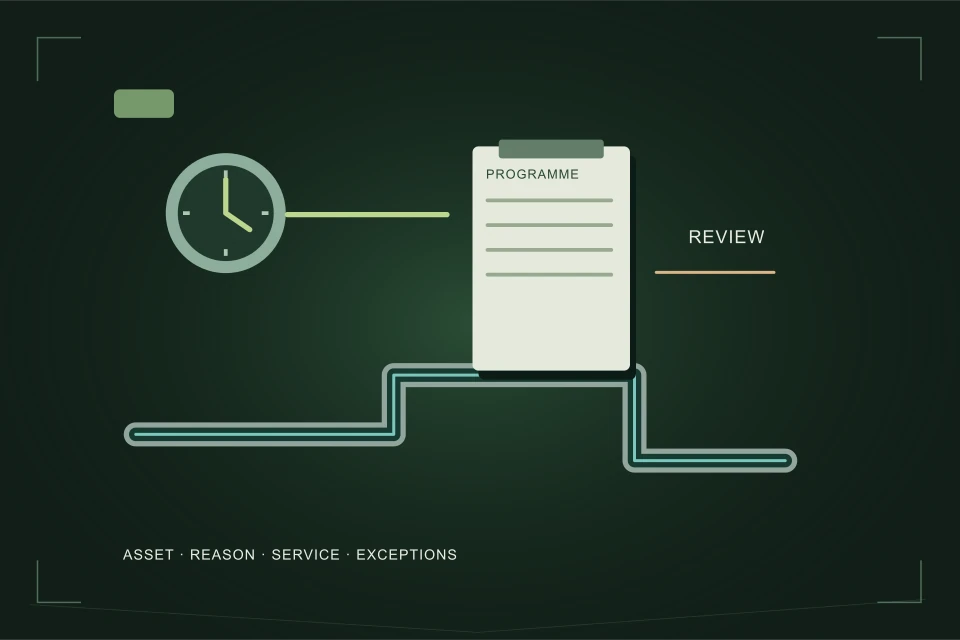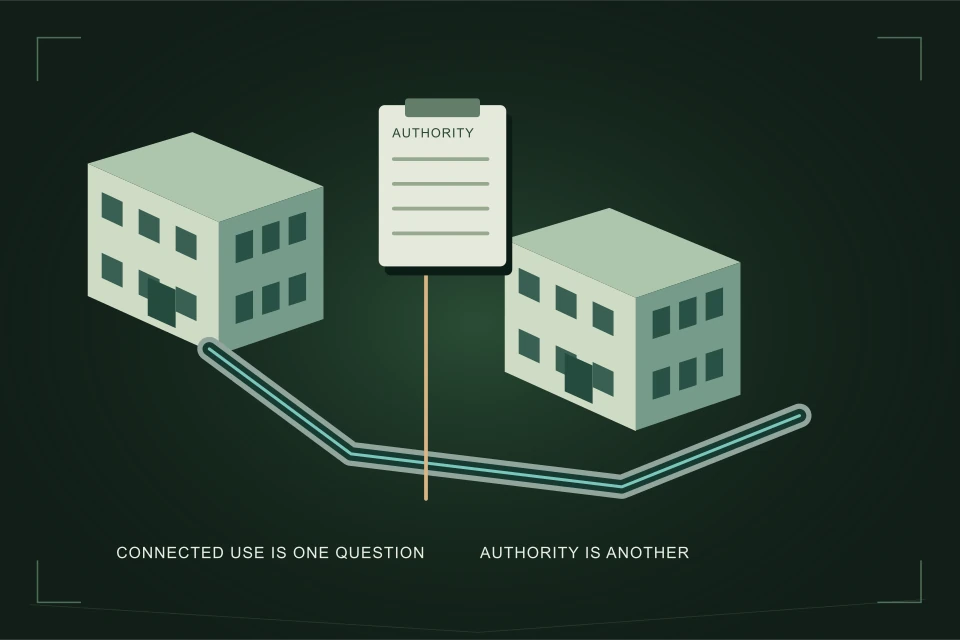
Determine the work boundary, authorising party and evidence before assigning a shared-line job. Shared use, physical location and legal responsibility are separate questions. Calgary describes the private connection from property line to building as the owner or builder responsibility, but a multi-unit or shared arrangement needs its actual documents reviewed. A camera image or neighbour assumption cannot settle the allocation.
- Why is a shared pipe not a complete ownership answer
- How should the municipal and private boundaries be checked
- Which documents belong in the responsibility review
- What should a scope boundary look like
01 /Why is a shared pipe not a complete ownership answer?
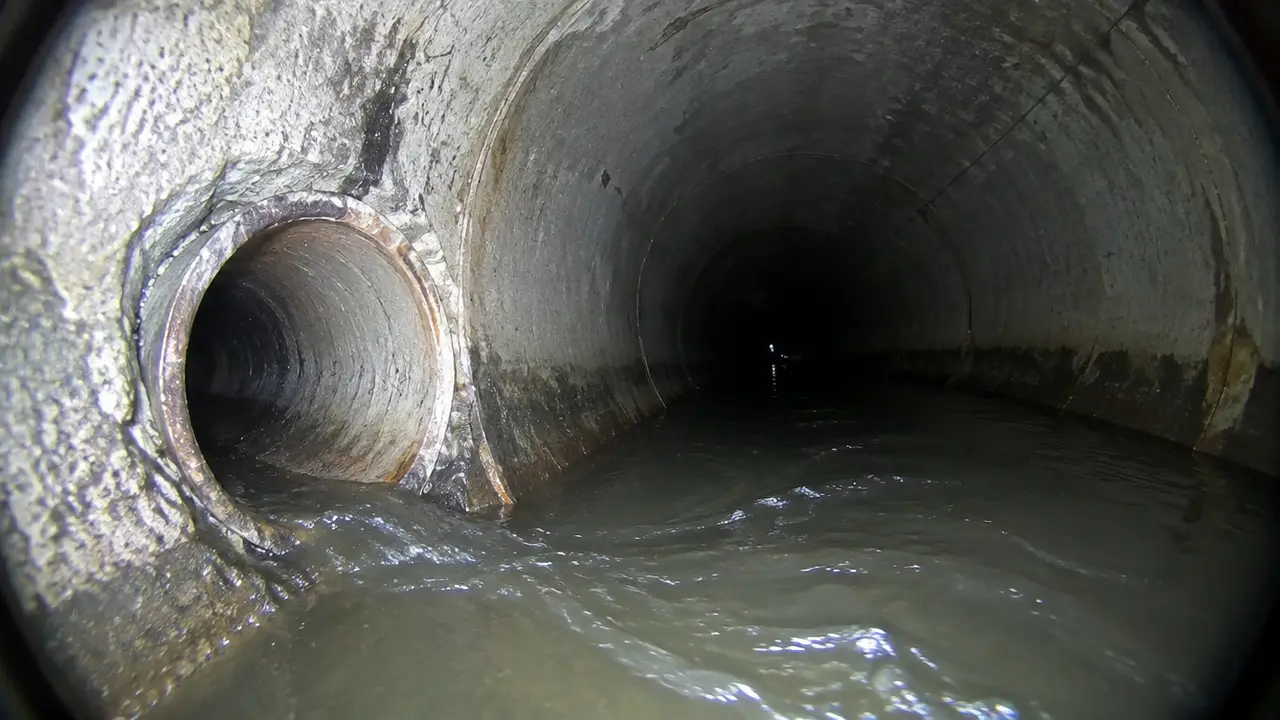
Several homes or suites can use a pipe without making its responsibility obvious from the surface. A line may be within a building, on common property or affected by an agreement. Use shared to describe the connected users and responsibility to describe the authority and obligations established by the relevant records. Avoid collapsing the two into a sentence such as everyone shares it, so everyone pays equally. That is an administrative or legal decision, not a camera finding.
The operating team should identify the immediate practical question: who can arrange access, authorise investigation and receive the report? During an incident, protect people and follow the responsible response arrangements while recording unresolved allocation questions. Do not delay necessary safety coordination simply because final billing responsibility has not been settled. Equally, a person arranging access should not be assumed to have authority for an expanded major repair. Make the authorisation boundary clear to the provider.

02 /How should the municipal and private boundaries be checked?
Calgary describes the owner or builder providing the connection from the property line to the building at their expense. That is a useful starting distinction for service planning, not a substitute for the actual multi-unit arrangement. Ask the City and project team to confirm the relevant public connection and private work boundary. If a line serves more than one lot or an unusual property configuration, bring the actual plans and agreements to that discussion rather than relying on the nearest residential record.
The City residential service-line dataset specifically excludes large commercial and multi-family properties. It should not be used to assign the material, route or ownership of your shared building sewer. Even an applicable public-side record is not a condition survey of the private section. Keep documented boundary information separate from traced route information. A qualified provider can help locate or describe a pipe, while the City and appropriate property documents address different aspects of authority and responsibility.
03 /Which documents belong in the responsibility review?
Assemble the relevant site plan, service drawings, property agreements and management or condominium records available to the responsible team. Obtain appropriate advice if the allocation is uncertain or disputed. Keep original versions and references so the decision can be traced later. A maintenance invoice or longstanding practice may be useful history, but neither automatically establishes every party legal obligation. Do not rewrite an old record to match the new preferred interpretation.
Use a separate work-authorisation record. It should identify the party approving the defined investigation or repair, the approved scope and how a proposed change is handled. The contractor needs a clear operational instruction rather than a collection of competing assumptions. Record who receives reports and who communicates with occupants. If an emergency authorisation has different limits from planned capital work, make that explicit in the work order instead of expecting the provider to infer it from the urgency.
04 /What should a scope boundary look like?
| Question | Appropriate evidence |
|---|---|
| Who appears connected? | Drawings, tracing and qualified observations |
| Which interval was inspected? | Camera start/direction/coverage record |
| Where may work occur? | Actual site and permission arrangements |
| Who may authorise the work? | Owner/corporation/management authority record |
| Who ultimately bears cost? | Relevant documents and appropriate advice |
Describe the actual authorised interval and deliverables. Inspection of one shared run is not approval to intervene in all downstream infrastructure. Ask the provider to record when a finding lies outside the booked scope and explain the next proposed decision. For work affecting public property or a public connection, confirm the applicable City arrangements. A private contractor service request should not silently become a municipal construction approval.
When a work scope changes, document the new authorisation and its reason. Keep the original quote and revised instruction rather than replacing them with a final invoice that hides how the decision evolved. This protects continuity for future managers and helps parties understand what was purchased. It also lets technical findings stay factual while administrative decisions about allocation are recorded in their appropriate place.

05 /How should residents and neighbouring parties be involved?
Share the practical information needed for access, water use and a service update through the established building process. Avoid publishing private agreement terms or personal information in an open notice. Where another property or building is affected, identify an authorised contact and arrange the required permission before routine planned work. This guide does not authorise entry onto another property or supply a universal notice period. Use the actual arrangements and professional advice where needed.
Keep communications factual while investigation continues. State what is known about the affected interval and which responsibility question is still being reviewed. Do not claim that a particular suite or neighbour caused a problem merely because it uses the same pipe. The manager can coordinate responders, protect occupants and obtain evidence while preserving uncertainty. Clear role assignment is more useful than a premature blame statement that later has to be corrected.
06 /Example: townhouses with an uncertain downstream arrangement
A townhouse manager has reports from two units and an old plan showing a possible shared run. The manager arranges safe response and qualified investigation under the actual management authority. The work order identifies the observed interval needed and limits any expansion pending approval. Meanwhile, the responsible property team reviews the site documents and asks the City to clarify the relevant service boundary. A single old plan is not presented as a complete ownership finding.
The provider handover records the accessed section, observed connections and limitations. Those findings are added to the technical register, while the responsibility determination is kept with the appropriate property decision. Future work can then begin with clearer authority, access and evidence. The parties do not need the contractor to solve a legal question in order to receive an accurate technical report.
07 /A useful commissioning check
A responsibility review should leave two clearly identified records: the technical evidence about the relevant route and the actual administrative decision about authority or allocation. Link them without merging their conclusions. State which documents and advice were relied on, who made the decision and what remains disputed or outside the scope. That structure helps a future manager understand the difference between an observed connection and the permission to commission work on it. When arrangements change, revise the decision record through the proper process rather than asking a new contractor to infer it from the old invoice history.
FAQQuestions people ask
Does common use mean common legal ownership of a building sewer?
Not necessarily. Connected use, physical route and legal responsibility can be different questions. Review the actual property documents, arrangements and appropriate advice. A contractor can supply technical evidence about the observed route and interval, but that evidence alone does not settle every cost or authority question.
Can a resident authorise a repair on a shared building line?
Use the actual building authority and agreement rather than assuming any resident can approve shared work. A person reporting symptoms or arranging access may not have authority for a major intervention. The provider needs a clear authorising party and defined scope. During an incident, follow the responsible emergency process while keeping expanded work decisions explicit.
Is the property-line distinction enough for every Calgary multi-unit arrangement?
It is a useful starting boundary from City service guidance, but unusual or shared property arrangements need their actual records reviewed. Confirm the relevant public connection and private scope with the City and project team. Do not use a residential dataset excluded from multi-family coverage as the answer to your building responsibility.
What should the contractor do if a finding is outside the approved interval?
Ask the provider to document the finding and limitation, explain what additional investigation or work is proposed, and obtain the appropriate authorisation before expanding the scope. Keep the original and revised instructions in the file. A useful report can identify an unresolved downstream question without claiming it has already been assessed or approved.
NETWORKGo deeper across the HAUSE Sewer network
Sewer permits, inspections and who pays: owner or city?
Sewer line permits and who pays in Canada: the usual owner vs city split, permit and inspection costs, road cuts, city tree roots and what to confirm.
SewerInspector.caInspecting the sewer after a backup: finding out why it happened
Why a sewer camera inspection after a backup matters: private vs municipal causes, timing, what to record for insurance, and how to stop it happening again.
SewerRoots.caWhose tree, whose pipe: who pays when roots block a sewer line
Who is responsible when a city or neighbour's tree sends roots into your sewer line: the general Canadian pattern, the evidence, and how to raise it.