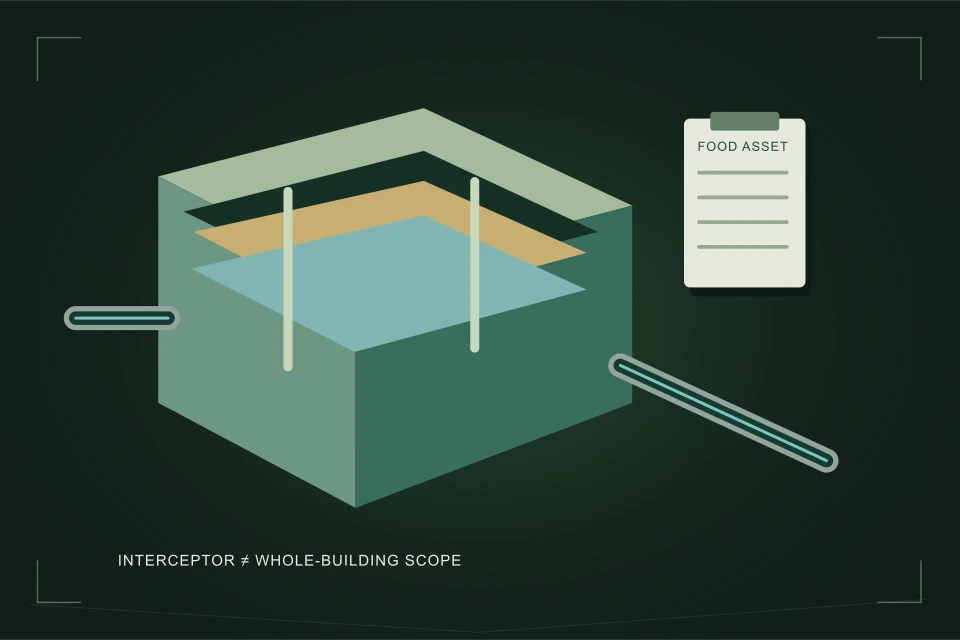
In a mixed-use building, an interceptor, kitchen branch and shared sewer need separate asset records and responsible contacts. Calgary sets specific food-service interceptor maintenance and record requirements. These do not apply automatically to every apartment drain. Coordinate the actual operation, provider and building manager, and investigate a downstream symptom with evidence instead of assuming its cause from the nearest kitchen.
- Which equipment should be kept separate
- What does Calgary require for the food operation
- How should a downstream blockage be investigated
- Who needs to coordinate operating constraints
01 /Which equipment should be kept separate?
Name the food-service operation, its relevant kitchen drainage, the grease interceptor where present and the downstream interval involved in a problem. Each item needs a location and record reference. A service invoice for an interceptor does not establish that the downstream sewer was inspected or cleaned. Conversely, a sewer cleaning invoice does not replace the interceptor maintenance record required for a food-service establishment. The building register should connect the records without merging their scopes.
Confirm the arrangement from actual drawings and qualified observations. An interceptor location on an old plan may have changed during a fit-out, and a shared run can serve additional users. Keep unknown connections visible until they are verified. Use the relevant business and building contacts to arrange records and access. Do not direct staff into a tank or confined space to establish the equipment arrangement. A conceptual diagram explains the relationship, but it is not a drawing of your specific installation.
02 /What does Calgary require for the food operation?
Calgary food-service guidance and the City 2026 interceptor service record describe maintaining the interceptor every four weeks or more often as needed and retaining maintenance, cleaning and inspection records for two years. Use the official current guidance to confirm the applicable requirements for the actual operation. The manager should know where the record is held, who arranges the service and how an exception is escalated. This is an interceptor obligation, not a blanket monthly sewer service rule for a whole apartment building.
The record should reflect the work actually performed and the provider findings. Do not complete missing dates retrospectively from a general account statement or an undocumented recollection. Ask the responsible business operator to supply the service evidence through the established property process. If there is a compliance question, contact the City rather than trying to settle it from the presence of a piece of equipment. The building can coordinate documentation while leaving regulatory interpretation to the appropriate authority.
03 /How should a downstream blockage be investigated?
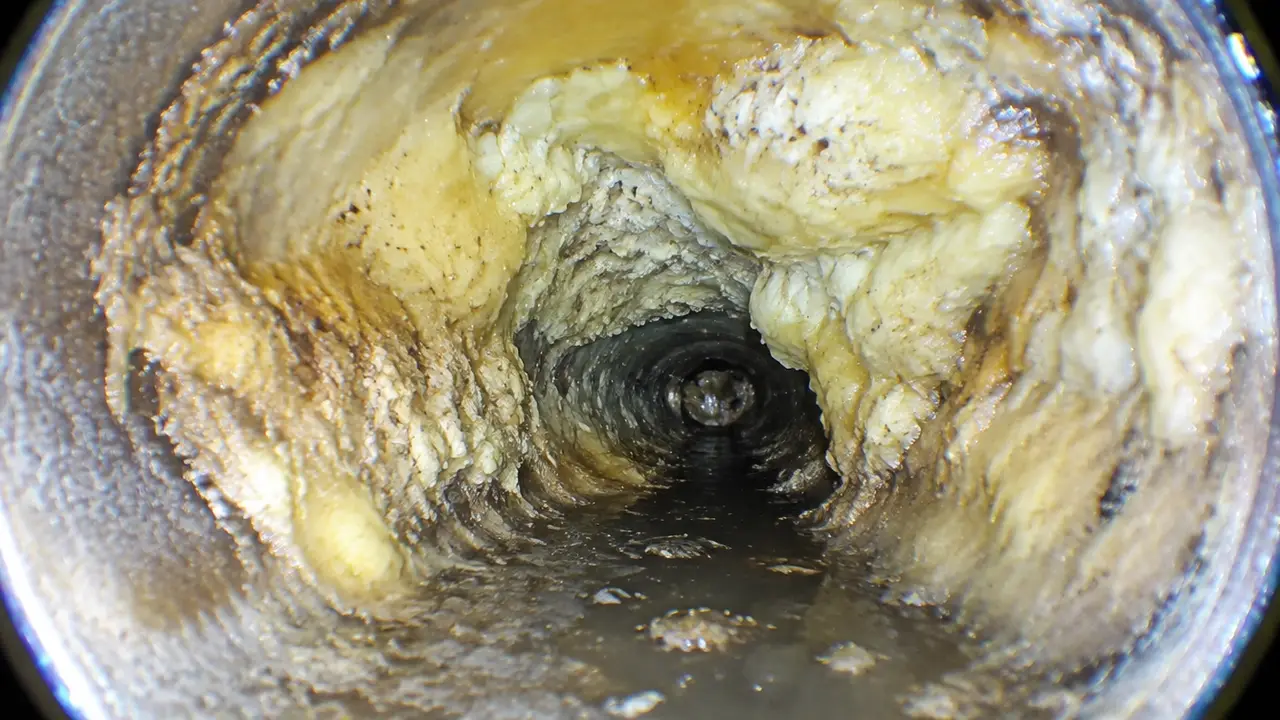
Begin with the symptom, affected area, accessed interval and recorded findings. A mixed-use building can have several possible contributing conditions. The presence of a kitchen does not establish that grease caused a backup, and a contractor description of deposits needs a route reference and context. Assemble the incident log, interceptor history and previous downstream reports. Ask the provider to explain the observed interval and what remains unseen before selecting a remedy or assigning responsibility.
If an investigation identifies deposits in a relevant run, the provider should recommend a suitable scope and method for that pipe condition and access. The manager should understand whether the proposed work restores flow, removes deposits, documents condition or addresses a structural defect. These outcomes are different. Keep the food-operation servicing plan and the sewer investigation in communication, but do not use one to silently replace the other. Each completed job should leave its own asset-specific record.
04 /Who needs to coordinate operating constraints?
Identify a building authoriser, food-business contact and qualified provider contact. Confirm the actual access points and any proposed water-use restriction before booking. A food operation may need to plan around preparation, cleaning or other operating requirements, while adjacent building occupants may share the affected run. The manager should not promise an interruption window until the provider and relevant users have discussed it. A confirmed appointment and a hoped-for duration should remain separate entries.
Keep private business and resident details in restricted systems. The general contractor brief can state that a food operation is connected and needs an authorised scheduling contact without publishing sensitive information. Ask the provider how changes on site will be approved and how restrictions will be lifted. Follow the building established communication process for notices. If the scope changes, record the revised instruction so business staff and building staff do not act on different versions.
05 /What evidence makes the handover usable?
| Asset | Record | Question |
|---|---|---|
| Interceptor | City-required service history | Was the applicable work and review documented? |
| Kitchen branch | Provider scope and findings | What interval was observed or serviced? |
| Shared downstream run | Report/footage/access references | Which connected uses and limitations are known? |
| Building operations | Notice and authorisation record | Who approved changes and released restrictions? |
Receive reports in a form that another qualified provider can understand. A note saying grease cleared is less useful than a described interval, accessed location and work completed. Where a recording is provided, preserve the original and its start reference. Keep limitations and recommendations separate from the completed scope. The closeout should show whether further investigation or access remains outstanding, rather than implying that all building drainage is in the same condition as the inspected run.
Review the information with the actual responsible parties. Operational coordination can expose missing records and uncertain scope without deciding a disputed lease or property responsibility. If an allocation question remains, obtain appropriate advice and retain the evidence used in the decision. Avoid writing a cause or blame statement into the building register merely to simplify billing. A factual record can support the subsequent administrative decision without prejudging it.
06 /Example: a restaurant beneath apartments
A manager receives a lower-level backup report in a building with a food operation. The initial log records the affected fixtures and timing while the team protects occupants and contacts appropriate responders. The manager obtains the actual interceptor service history and previous drain reports, but does not declare that the restaurant caused the event. The contractor brief asks which connected interval is involved and what evidence can be obtained safely.
If the inspection identifies a particular downstream deposit or defect, the report is linked to that run and its observed coverage. The business and building contacts then coordinate the relevant service or investigation, with applicable interceptor obligations continuing separately. The evidence supports a practical next decision, and the operation is not treated as a cause solely because it is located nearby. Keep the reports, notices and authorisation together for the next building team.
07 /A useful commissioning check
During a mixed-use scope review, draw a simple chain from the actual food operation through its interceptor and branch to the shared interval being discussed. Mark each link with its source or uncertainty and list the person who holds the relevant service record. This exercise is a coordination aid, not a design assessment. It prevents a downstream invoice from being filed as interceptor compliance evidence and prevents an interceptor visit from being described as a complete building sewer assessment. Ask the qualified provider to verify the relevant technical links before using the sketch to authorise intervention.
FAQQuestions people ask
Do Calgary food-service rules create a monthly cleaning requirement for all apartment sewers?
No. The City interceptor guidance applies to the relevant food-service equipment and operation. It is not a universal schedule for every building drain. Identify the actual regulated asset and follow the current official requirement. Let a qualified provider recommend other building maintenance from the specific use, condition and evidence.
Can a manager infer grease as the cause from a restaurant being downstairs?
No. Record the observed symptoms and obtain an appropriate investigation of the affected interval. A nearby business can be relevant context, but it is not evidence of causation. Compare actual service records, connected routes and contractor findings before selecting work or assigning responsibility.
Where should food-service and building sewer records be linked?
Use the building asset register to connect the relevant operation, interceptor, branch and shared run while retaining separate scopes. Store the actual provider reports and service histories. A cross-reference helps the next team find evidence without implying that work on one component certifies every connected pipe.
Does a sewer camera visit replace an interceptor maintenance record?
No. A camera report documents the observed interval and its limitations. The interceptor service obligation has its own applicable record of maintenance, cleaning and inspection. Confirm both scopes with the responsible operator and provider and retain their original evidence. Do not fill one record using an unrelated invoice.
NETWORKGo deeper across the HAUSE Sewer network
Inspecting the sewer after a backup: finding out why it happened
Why a sewer camera inspection after a backup matters: private vs municipal causes, timing, what to record for insurance, and how to stop it happening again.
PipeCleaning.caWhat drain cleaning is, and what a pipe cleaning service actually does
What is drain cleaning? What a pipe cleaning service does on a visit, whether it counts as plumbing, who can do it, and how to choose a service near you.
SewerCleaners.caCondo and multi-family sewer cleaning programs
How condo boards build a sewer cleaning program: stack cleaning, building drains, camera baselines, reserve fund planning, bylaws and resident notices.